Screen Printing on Handmade Paper
Ayesha Ansari · Feb 13, 2025 · 6 min read
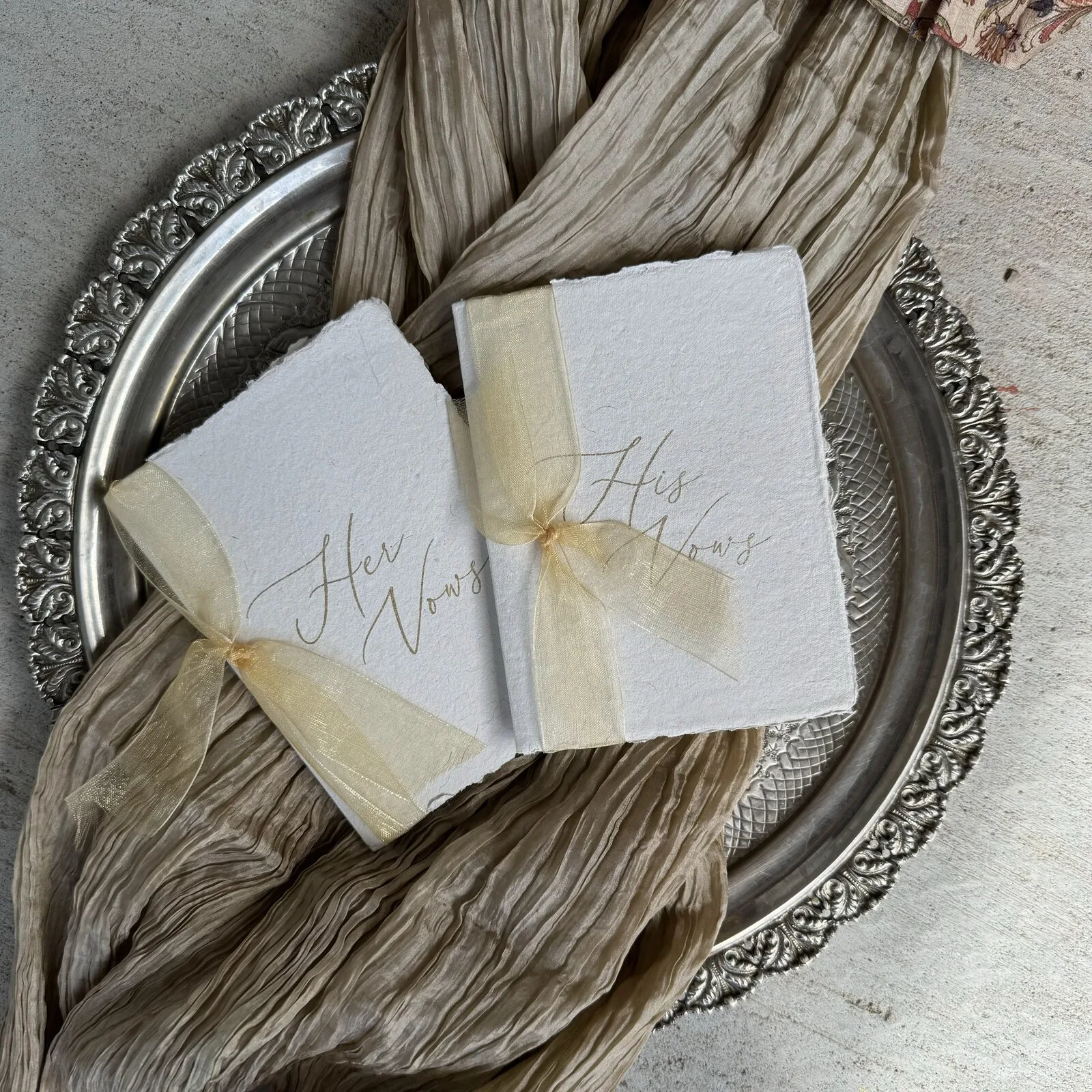
Silk screen printing, sometimes called serigraphy, is one of the oldest surface-printing techniques still practiced today. Ink is pushed through a fine mesh screen onto whatever sits beneath it, and when that surface is handmade deckled-edge paper, the result is something a machine print can never quite match: a soft, tactile layer of ink sitting on top of naturally textured, irregular-edged sheets.
At PARWANA Paper, we've been pairing this printing method with our own handmade paper to create pieces with real character — wedding stationery, fine art prints, and one-off keepsakes that carry the slight imperfections of both processes.
Why the pairing works so well
Handmade paper already has a lot going for it: uneven, feathered edges, a subtle grain, and a warmth that mill-made paper doesn't have. Screen printing adds to that rather than fighting it.
- Opaque, richly saturated ink sits proud of the page instead of soaking flat into it, so colours read bold and confident.
- Because the ink has a slight thickness, finished pieces have a gentle raised texture you can feel as well as see.
- The combination suits anything meant to feel special — invitations, formal stationery, framed prints — rather than everyday, disposable print jobs.
How a print actually comes together
Getting a clean print on handmade paper takes a bit more care than printing on standard stock, mostly because handmade sheets vary from one to the next.
1. The design is prepared and burned onto a screen as a stencil, one screen per colour.
2. We choose the ink and mesh together — a finer mesh for detailed line work, water-based ink where we want it to sit gently into the fibres rather than sealing them.
3. Each sheet gets a quick test pass first, since thickness and absorbency shift slightly from paper to paper.
4. Ink is drawn across the screen with a squeegee, one colour at a time, left to dry fully before the next pass or any finishing touch like foiling or embossing.
None of this is fast. It's slower than digital printing by a wide margin, and that's rather the point — every sheet ends up genuinely one of its own.
Where we've taken it: our handmade journals
We used this exact process on a pair of journals meant for couples — one embossed simply as "His," the other "Her" — each screen-printed onto our own deckled paper covers in gold or black ink. They've become a favourite for wedding gifts, anniversaries, or anyone who wants somewhere physical to put down vows, love notes, or a year's worth of reflections.
A few things we've learned along the way
- Always test a scrap sheet first — handmade paper drinks up ink differently than you'd expect.
- Go easy on the pressure. Too much and the ink bleeds into the fibres instead of sitting on top.
- Layer slowly. Multi-colour work needs each pass fully dry before the next.
- Let the small variations be part of the charm — no two prints, and no two sheets, come out quite identical.
Screen printing on handmade paper isn't the fastest way to make something beautiful, but it's one of the most rewarding. If you're after wedding stationery, a fine art print, or a journal with real weight behind it, we'd love to make one for you.